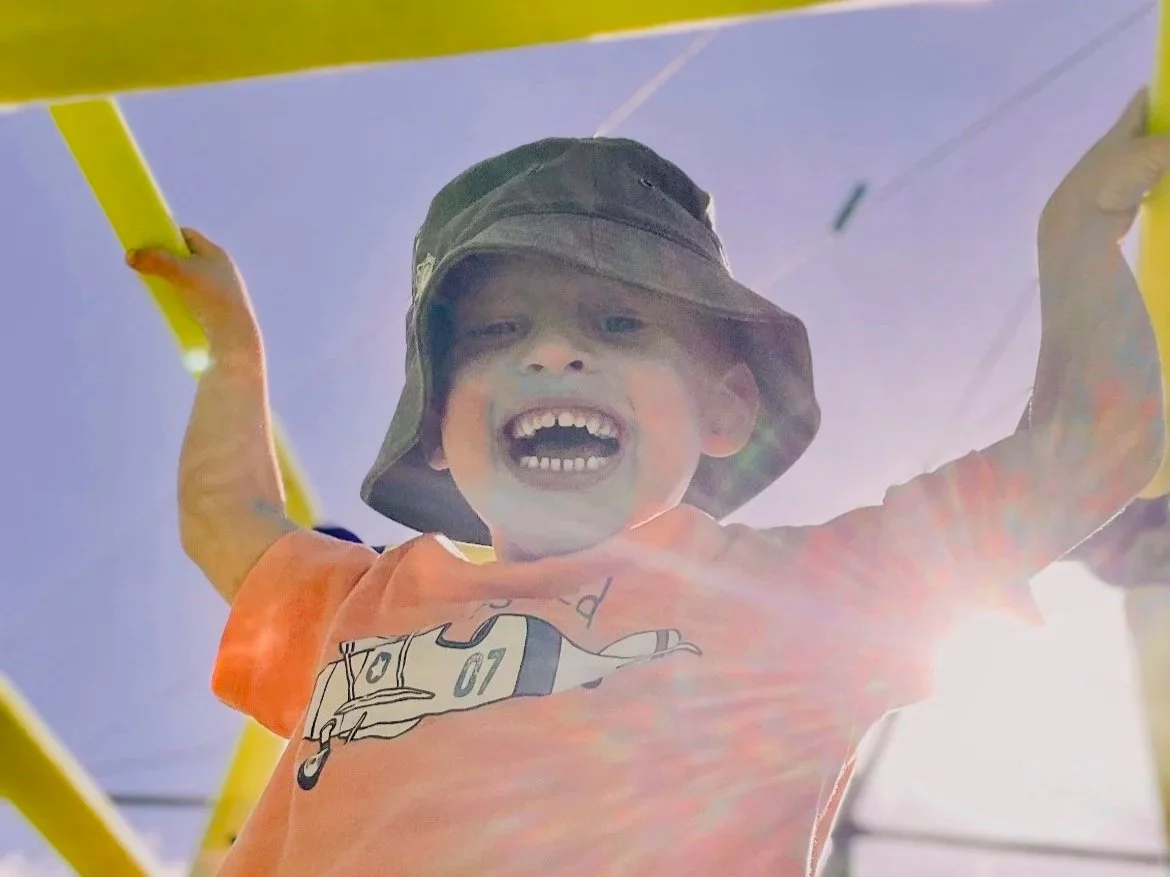
Meet Ruben
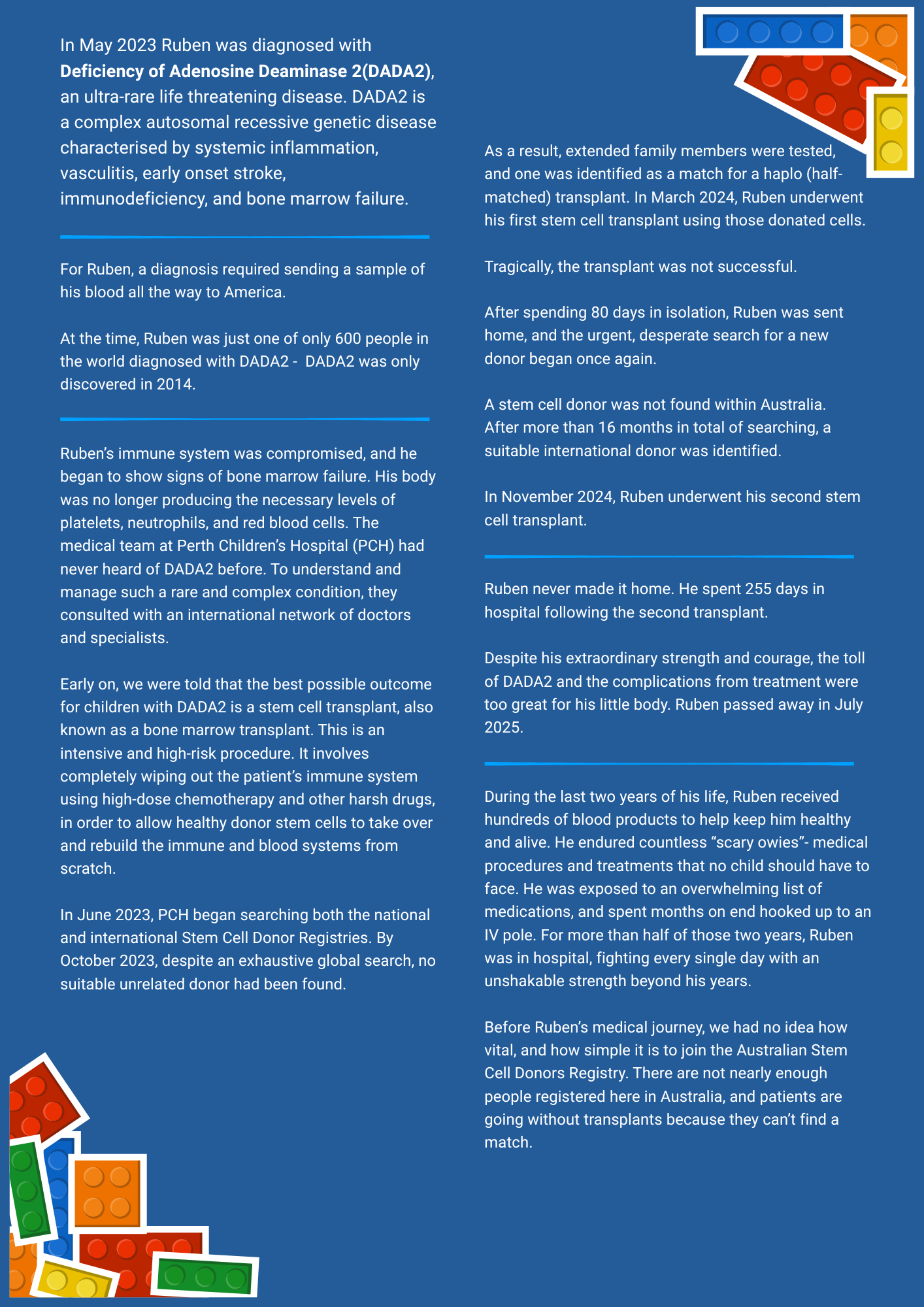
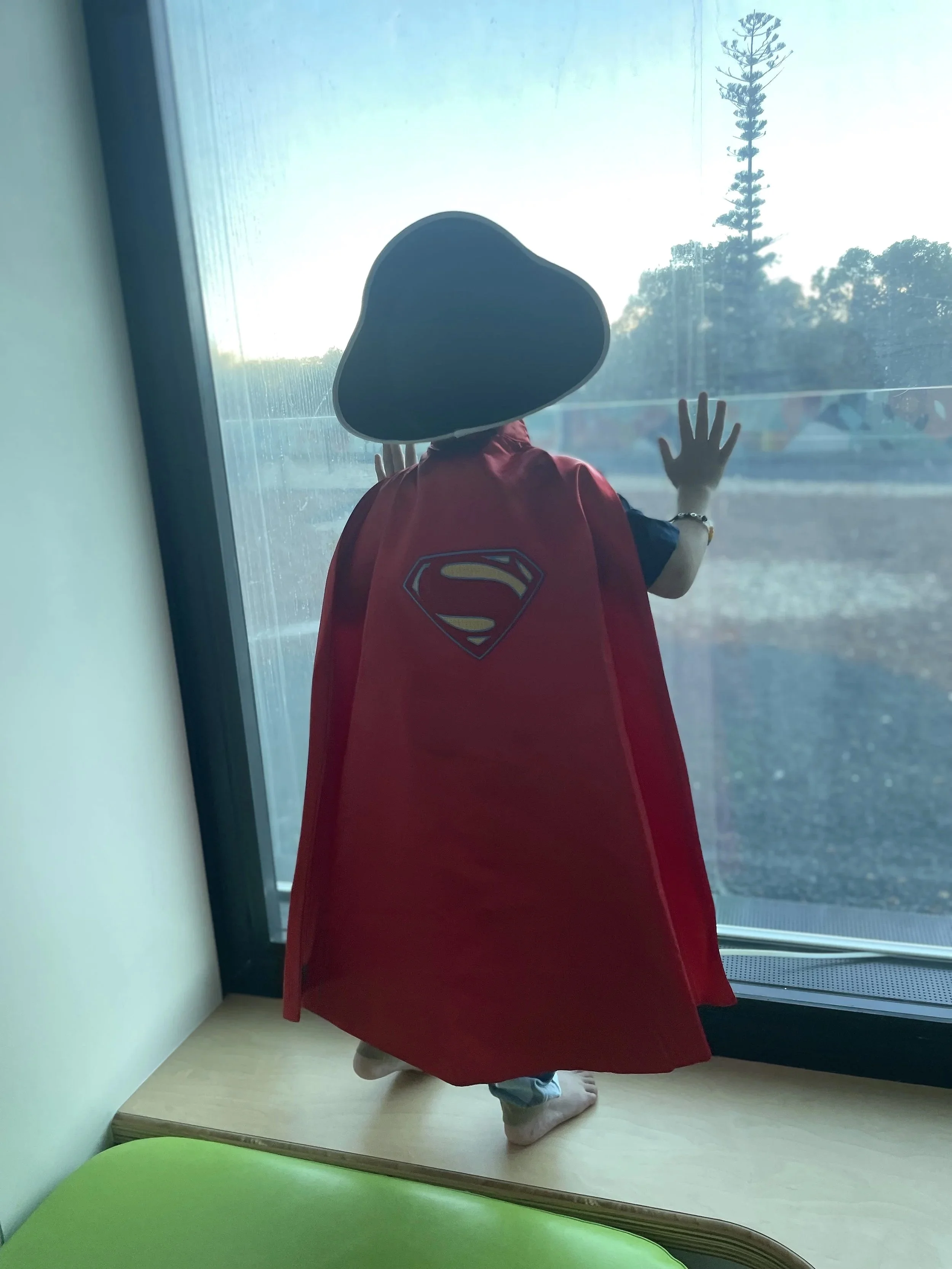
A beautiful, bright, determined and inspirational 5 year old.
Save a life and ‘ROLL UP FOR RUBEN’A force for life In May 2023 Ruben was diagnosed with Deficiency of Adenosine Deaminase 2 (DADA2), a very rare life threatening disease. DADA2 is a complex monogenic recessively inherited auto-inflammatory disease characterised by systemic inflammation, vasculitis, early onset stroke, immunodeficiency, and bone marrow failure.
In many cases, inflammation from DADA2 can cause mild but chronic symptoms like fevers and rashes. In other situations, the condition affects the bone marrow, mimicking other haematological conditions and often making diagnosis extremely difficult.
For Ruben, a diagnosis required sending a sample of his blood all the way to America. At the time, Ruben was just one of only 600 people in the world diagnosed with DADA2—so rare that it was only discovered in 2014.
Ruben’s immune system was compromised, and he began to show signs of bone marrow failure. His body was no longer producing the necessary levels of platelets, neutrophils, and red blood cells. The medical team at Perth Children’s Hospital (PCH) had never heard of DADA2 before. To understand and manage such a rare and complex condition, they consulted with an international network of doctors and specialists.
Early on, we were told that the best possible outcome for children with DADA2 is a stem cell transplant—also known as a bone marrow transplant. This is an intensive and high-risk procedure. It involves completely wiping out the patient’s immune system using high-dose chemotherapy and other harsh drugs, in order to allow healthy donor stem cells to take over and rebuild the immune and blood systems from scratch.
In June 2023, PCH began searching both the national and international Stem Cell Donor Registries. By October 2023, despite an exhaustive global search, no suitable unrelated donor had been found.
As a result, extended family members were tested, and one was identified as a suitable match for a haplo (half-matched) transplant. In March 2024, Ruben underwent his first stem cell transplant using those donated cells. Tragically, the transplant was not successful. After spending 80 days in isolation, Ruben was sent home, and the urgent, desperate search for a new donor began once again.
A viable donor was never found within Australia. After more than 16 months in total of searching, a suitable international donor was identified. In November 2024, Ruben underwent his second stem cell transplant.
Ruben never made it home. He spent 255 days in hospital following the second transplant. Despite his extraordinary strength and courage, the toll of DADA2 and the complications from treatment were too great for his little body. Ruben passed away in July 2025.
During the last two years of his life, Ruben received hundreds of blood products to help keep him healthy and alive. He endured countless “scary owies” — medical procedures and treatments that no child should have to face. He went through high-dose chemotherapy, was exposed to an overwhelming list of medications, and spent months on end hooked up to an IV pole. For more than half of those two years, Ruben was in hospital—fighting every single day with an unshakable strength beyond his years.
Before Ruben’s medical journey, we had no idea how vital—and how simple it is to join the Australian Stem Cell Donor Registry. There are not nearly enough people registered here in Australia, and patients are going without transplants because they can’t find a match.
Despite being only five years old, Ruben was a born advocate for other children. He was deeply empathetic, always asking the nurses and doctors if the other kids on the ward were okay whenever he heard someone crying or upset. Even in the midst of his own challenges, he was constantly thinking of others.
It is our hope—and Ruben’s wish—that everyone considers donating blood products: blood, plasma, or platelets (which Ruben affectionately called “mango smoothies”). Never underestimate how lifesaving your donation can be. (Life is the reason | Australian Red Cross Lifeblood )
If you’re 18 - 35 years, please consider joining the Stem Cell Donor Registry at stemcelldonors.org.au. And if you’re over 35, start the conversation—talk with your family, friends, sports teams, community groups, and workplace, and encourage them to join.

16 months to find a stem cell donor is far too long to wait. We hope that in the future, no other child or family will have to endure such an agonising delay.
The more people who join the registry, the greater the chances others will have the opportunity to live the long, healthy, and adventurous life that Ruben was sadly unable to have.